Blog

OE Construction Corp

Women in Construction Career Stories: Part 2

This is Part 2 of our career “stories” from my peers in the construction industry. The question I get asked most often is “How the heck did you end up in construction?”. These stories are about women who had a family connection or background in transportation and construction. They highlight the lessons learned along the way, and show that who we surround ourselves with has a lot to do with where we end up. We want to hear about the unique talents women in construction bring to the table. So, if you are working in the industry or thinking about a career path in this direction, reach out and let us know more. 

I was born and raised in Alaska, from a family who made their living in the very industry I now have my career in – construction. I moved to Colorado in high school and had no question that after, I would go to college. I started my freshman year with the intent of getting an elementary education degree. Halfway through that first year, I switched my major to business management. I had no idea “what I wanted to be when I grew up” so that felt like the safest degree I could get at the time. Four years later, I was the first in my family to graduate with my college degree – a bachelors in business administration with an emphasis in management. 

I struggled to find my place in the career world after college. Due to my outgoing and social personality, I continued to find myself in sales roles. None of those roles satisfied me – I wanted to find something more, something I could find passion in. A family friend pushed me to come to work at United Rentals. With no other job prospects at the time and feeling at a dead end, I gave in. Four years later, here I still am. I have found that purpose and a passion I was looking for. The construction industry is small, everyone knows everyone in some capacity. With that, comes a sense of family. Because of that, I take what I do very seriously. Providing trench safety knowledge and training to our customer base is more than “sales” – it’s more than renting out a product. 

We are educating because we care. We are a teammate to our customers, helping them solve issues in order to increase production and most of all, keep everyone safe and going home the same as they came to work. Yes – the days are long, we are always on call and everything is an emergency but being in this industry, is worth every second of that. Shelby Hone – Trench Safety Specialist United Rentals Trench Safety 

Construction has always felt “familiar” or comfortable to me. My dad started his own masonry company before I was born, (short-lived) but ended up laying brick for 40 years. Retired as a Foreman less than a decade ago from the Brick Layers Union. My mother was the first female cop in southeastern Wisconsin in the mid-70s. She worked with only male officers her entire 25 year career. 

My 2+ years with CO811 have been the best fit for me in my 19 years of professional work history. Safety and preventing damages/injury is innate to me, (but didn’t realize it until I landed this job). Neeley Duran – Damage Prevention Liaison Denver Metro Division Colorado 811 

I got my start long before I even knew I would be in this business. My dad ran a heavy truck finance and lease company in Fargo North Dakota for 40 years so I was around the business all of my life. But I never thought I would work in the same business as my father. In 1996 I was a month from graduating from Arizona State with a business and finance degree, I had no idea what I wanted to do with the rest of my life. I had worked as a bank teller while going to school and was robbed at gunpoint so I knew I didn’t want to do that anymore. I grew up in Fargo North Dakota so I really wasn’t a big corporate person, I didn’t want to just become a number. So I went to my parents to see if they had any suggestions. My dad made a suggestion that I go and interview for a finance job in Denver Colorado. My dad said there was a Freightliner dealership in Denver that is hiring for a finance and insurance rep. The owner of the dealership was a salesman at the dealership that my dad worked in Fargo, and the person that ran the finance and lease company was also a gentleman that used to work for my dad is Fargo. So my dad knew they were looking to hire and grow their finance business. I flew to Denver for the interview and got the job. May 31. 1996 I left Phoenix to start my journey in Denver Colorado. 

I started out in the front office learning the difference between a tractor and a truck. Before taking this job I thought a tractor was a green thing that plowed fields named “John Deere”. I had a lot to learn. My new position was logging repairs and tracking work orders on the used truck inventory. I tried to learn as much about the transportation business as possible. I answered phones, made copies completed title work and anything else I could get my feet wet. 

In 1997 we became a Select Truck Used dealer. I was given the opportunity to move into a finance and insurance position. I worked in a small house with 8 sales guys while our new building was being built just adjacent to the small house. My office was right next to the bathroom which definitely built character one way or another. There was a swamp cooler on the wall in my office. Everytime we turned it on dust and dirt would blow all over my desk for about 2-3 minutes. I worked with owner operators, vocational and new start up individuals. This was a very crucial part of my learning experience. Working in a small house with 8 sales guys will build character like it or not. One of the salesman told the customers I was his “little sister.” I build some amazing friendships with fellow co workers and customers. I have very fond memories of those times. My dad always told me that I would be more successful than a man in the same position. My dad has been very instrumental in my growth and success in the business. In 1999 we moved into the new building, we had hit it big. I was going to get my own office away from the bathroom and upstairs all by myself. Well that didn’t last but a few weeks and I was back downstairs. We had trouble hiring and maintaining a full time receptionist. So I got the pleasure of working on the same floor as everyone else. Which was OK because it was lonely upstairs all by myself. All of this was ok, I liked what I did and who I did it with. 

In late 1999 I was given another opportunity. I was asked if I wanted to move over to the lease company. I talked it over with my dad and he gave me the courage to make the move. He has always said “Women will be more successful in a man’s world. A man will remember a woman walking into their office to talk about financing trucks and trailers more than another man.” This was going to be a national program allowing us to work with body manufactures all around the country. I jumped at the opportunity and was so excited for the next journey. However from late 1999 – late 2000 we struggled finding someone to fill my position. I spent and got the pleasure of going back and forth between the lease company and our used truck department. Again I never complained because I got to spend time again with all of those great people that made me who I am today. 

Finally late 2000 I was able to really jump into my new position. We started calling on any and all manufacturers from Canada to Florida and California to New York. We lost more new vendors than we retained. It was the losses that made us all stronger and more hungry to get this new program off the ground. It was shortly after that that we were able to really get the ball rolling. I continued to work in the roll of lease and finance rep for the west coast over the course of 18 years until another opportunity arrived. 

2018 I was asked if I wanted to move into a managerial position. I was so scared as I had never managed anyone before. After much thought and guidance from my mentor and largest supporter my dad, he told me “go for it”, so I decided to go for it. I now manage 3 other individuals and we work the west coast. We have a portfolio of just shy of $80 million and we are on track to do $100 million in 2020. All I can say is my dad was right! It started out as a job and 23 years later it has bloomed into a career. Cassie Bergo – Trans Lease Inc. 

So, if you are a young woman looking at construction as your potential career path, take a look around you and try to connect with programs and resources at your school, other outside programs such as Transportation and Construction Girl (https://constructiongirl.org/), Associated General Contractors Construction Careers Now (https://www.buildcolorado.com/), ask your family and relatives if anyone they know is in construction, check out community college programs and college certificate programs (there are many out there) and don’t give up! There are so many career opportunities in construction, positions from the back office (accounting, administration, engineering, estimating, project management) to the field office (apprentice trade programs, field workers of all types, coordinators, field engineers, surveyors, foreman, superintendent and so on). 

Transportation and Construction Girl (Hoya Foundation) is in the process of creating videos with women’s stories about the industry and how they got their start. Look for more information about the videos in 2020, I promise they are stories of great inspiration. 

Terri Olson – OE Construction Corp. 
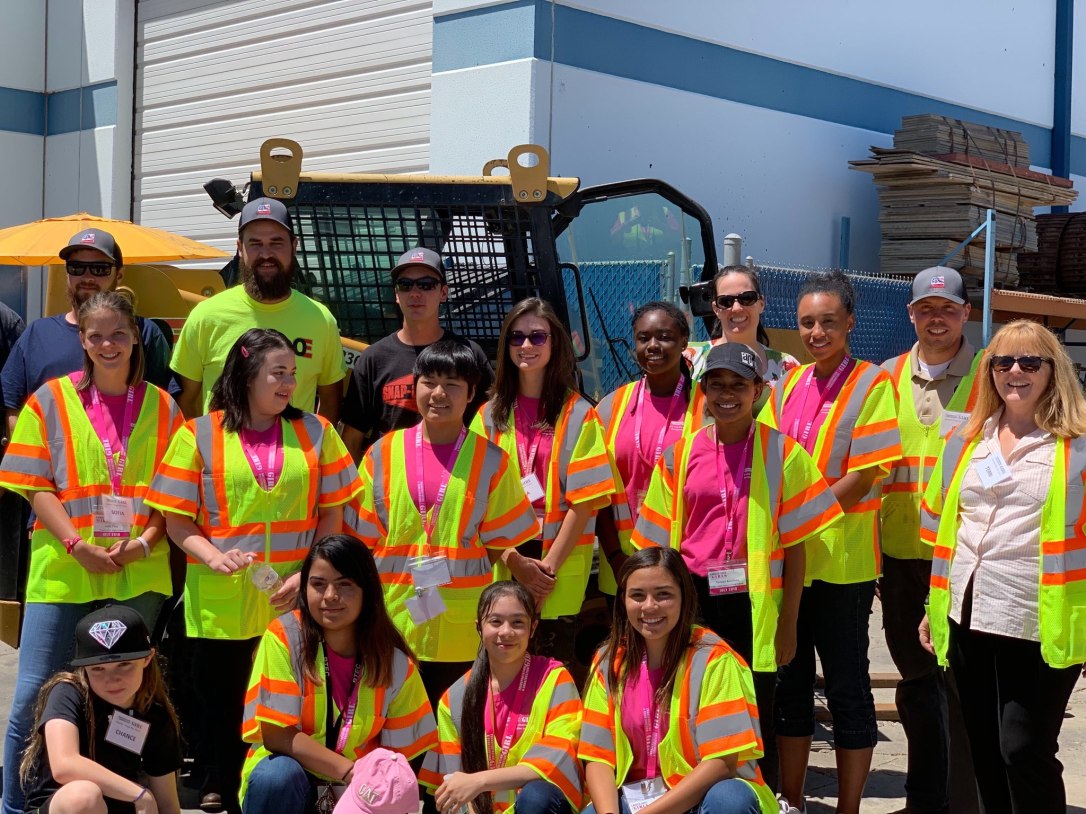
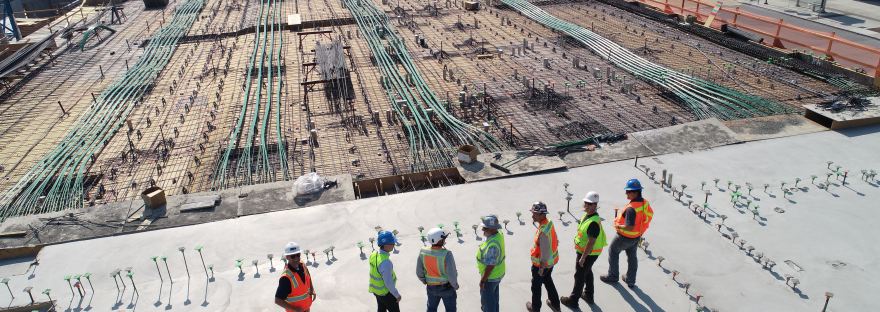
Careers in Construction Event Group Photo

OE Construction Corp

What’s More Important: IQ or EQ?

According to research, your overall success in life can be directly attributed to your EQ. 

“Research carried out by the Carnegie Institute of Technology shows that 85 percent of your financial success is due to skills in “human engineering,” your personality and ability to communicate, negotiate, and lead. Shockingly, only 15 percent is due to technical knowledge.” (Source

The article quoted goes on to mention that people will more happily do business and work well with an individual who is likeable, over someone who is technically more proficient. 

So how does that apply in the construction industry?

What are IQ and EQ?

Before we go on to look at the question of how EQ can be more relevant than IQ in business, including construction, let’s review what each of these measures are.

IQ, or Intelligence Quotient, refers to a person’s technical competence (math, verbal, spatial skills), as well as their ability to reason logically. Einstein was said to have an IQ of 160. 

EQ, or Emotional Quotient, refers to someone’s personality, their ability to understand the emotions of others and to lead with that understanding in mind. In integral part of EQ is the ability to communicate effectively, as the quote above notes, influencing the behavior of others, rather than leading by fear.

When you’re looking at hiring someone to fill a certain role in the field, their skillset is important, and let’s face it: you’re first looking at a resume or an application, not someone’s personality, at least when you’re deciding whether or not to interview them.

construction crew job site oe blog

But there is a fair body of research that says that you should hire for personality and attitude and train for skill. It’s the same reason that colleges started looking for more than good grades in the kids they let in. A more well rounded person, with a good personality and communication skills, has every chance of success, and perhaps even more so. 

Hiring based on EQ may seem easier said than done, particularly in industries like construction, but given the shortage of qualified workers these days, it’s certainly worth thinking about. While machines and technology can take over some roles and jobs, they can’t do everything: we still need people who can make the whole ship move forward!

“In August (2019), 7.1 million construction jobs went unfilled, and 80% of construction companies say they struggle to recruit and hire people, according to a survey by software firm Autodesk and Associated General Contractors of America.” (Source)

This shortage makes clear that it’s worth investing in training someone who has an outstanding EQ and giving them the skills they need to move forward. They will be more successful than someone who has a high IQ but no people skills.

Why EQ matters in the workplace

If you think about it, once a person has learned the technical skills they need to do their job, a lot of what creates difficulties in any workplace is the human interaction. Whether it’s as a project manager or team leader, someone who runs equipment in the field or works in the back office, they’ll have to deal with people and all their many personality quirks. 

construction site woman

The individuals with a high EQ are in a better position to interact appropriately and effectively with others, both above them and below them, as well as their own peer group. 

“It turns out, success in both life and business is a matter of emotion, relationships, and character, rather than raw intelligence.” (Source)

Applying EQ in hiring for the construction industry

Figuring out who the individuals are who will be able to manage their emotions, can evaluate and appropriately react to the emotions of others and make decisions even under stress is valuable. These are the candidates who will be able to advance and will promote the strengths of others who work with them. It all leads to a healthier and happier work environment.

“For example, imagine that a high-potential Project Engineer joins a team on a complex project. An average Project Manager would carefully oversee the employee’s work, give advice on areas for improvement, and provide training as needed for the success of the project. However, a Project Manager with emotional intelligence might design specific stretch assignments for that Project Engineer based on his or her long-term career goals and existing strengths, create opportunities for coaching and mentorship, and encourage open communication to ensure that the employee feels valued and respected. Employees appreciate working for someone who is clearly invested in their success, and they are likely to be much more engaged in their work and much less inclined to pursue other opportunities than employees whose leaders exhibit less emotional intelligence.” (Source)

Given that qualified candidates are hard to come by, having managers and team leaders with a high EQ can help stem issues of turn over. So while skills are important, a construction site can be a stressful place, and having people working on it who can function well under pressure, acting as a positive force when leading others, is vital for the long term success of any company.

At OE Construction, we look for more than skills. We look for the people behind those skills because we want our teams to be like family, supportive and strong, through thick and thin!


OE Construction Corp

Is There a Place for Intuition in Construction?

The use of practical intuition in business just makes sense. You don’t always know the right answer in every situation automatically; no one does. In science, medicine and even high finance, an intuitive thought can lead to an important discovery. Of course, you need to investigate your idea, to see if it has actual merit before acting on it, but intuition is often the inspiration that leads people to decisions they might not otherwise have attempted.

“Gerd Gigerenzer, author of the book Gut Feelings: The Intelligence of the Unconscious, says that he is both intuitive and rational. “In my scientific work, I have hunches. I can’t explain always why I think a certain path is the right way, but I need to trust it and go ahead. I also have the ability to check these hunches and find out what they are about. That’s the science part.” (Source)

Even in construction, whether in the field or back at the office, team members and managers alike may intuitively know when they need to “pay attention” to an issue, concern or situation, above and beyond what is readily apparent. So while it might seem counter productive to trust intuition in the field, where machinery, projects and indeed lives are in the balance, you should never completely discount its value.

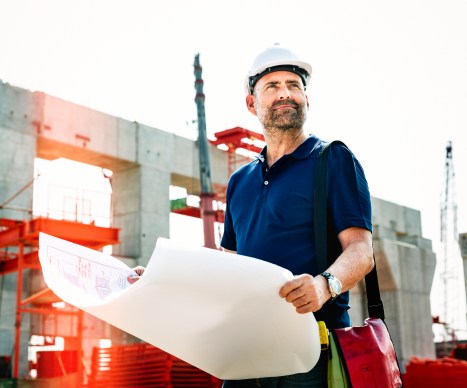
Construction team working on a blueprint

Is intuition a sign of intelligence?

Indeed it is! After all, having intuition on a particular situation tends to be the result of what the author of the above mentioned article refers to as “collective intelligence”.

“If all you do is sit in a chair and trust your intuition, you are not exercising much intelligence. But if you take a deep dive into a subject and study numerous possibilities, you are exercising intelligence when your gut instinct tells you what is – and isn’t – important.” (Source)

Have you ever been in a position to make a decision and your rational brain is telling you to go one way, based on the evidence before you, and yet you have that nagging voice in the back of your mind, telling you that there might be more to the situation than what is currently obvious? That’s your intuition kicking in and telling you to look harder.

The smart person gives at least some merit to that intuition, as it is based on your experience, pulling from your brain’s knowledge resources in a way that isn’t systematic and computer-like, but rather based on something a little more primal. 

Intuition and instinct aren’t that far apart but they’re not the same

Lemmings jump off cliffs by instinct. It’s not a choice, or a thought process. Someone who only follows the rational mind, without even considering their own hunches and intuition, is a lemming with opposable thumbs: they just do it. 

Instinct is innate and primal while rationality—as well as thumbs—is what sets humans apart from animals, but there needs to be room for something more abstract in terms of how we make decisions. Someone who is using intuition to assess a situation or make a decision is making a connection between rational thought and instinctive behavior. 

Site engineer on a construction site

“The conscious is an expert at logic and will use it relentlessly. Conversely, the unconscious mind searches through the past, present, and future and connects with hunches and feelings in a nonlinear way. Its process is cryptic to the logical mind, as it defies the conventional laws of time and space.” (Source)

For example, you might not analyze why a site needs further examination before continuing a project after a major weather event; instead, you might have some intuition based on your experience that tells you that you need to give it a second look.

Using intuition in work and life

According to Gigernzer, the trick is not to amass loads of information in your brain, but instead to discard what isn’t relevant: to know intuitively what you don’t need to know. By doing this, you can dump jargon and the need to keep too much information in your head, when much of it won’t help you make a decision, when push comes to shove.

By building and using intuition, you can make decisions faster because you can get to the core of an issue quickly, getting rid of extraneous information that isn’t relevant. In a chaotic environment, which a construction site can be, this can be the difference between success and failure. It takes practice, to make sure that you’re not overly relying on your hunch instead of the data in front of you, but it’s a cognitive skill that every brain can use to make better, quicker decisions. As you learn to trust your intuition to make decisions quickly, your personal value and the value of the work you provide will increase, vis-a-vis the people you work with and for.

Bottom line? In construction, as in most other endeavors, it’s okay to trust your experience, knowledge and understanding of the situation; act on your “intuition” when it makes sense to and you’ll go a long way! 

OE Construction at Construction Girl 2018
OE Construction Corp

Women in Construction – Part 1

I promised to share some career “stories” from my peers in the construction industry.  The question I get asked most frequently is “How the heck did you end up in construction?”.  It’s a long story, but here’s a quick summary:

I didn’t start out dreaming about working in the civil construction industry, especially underground utilities. I started in computer programming and networking back in the late 1970’s, working with some of the very first micro computers.  The technology industry back then had very few women working in software and hardware and I truly fell in love with it. I worked for companies such as Microsoft (yes, I got to talk with Bill Gates back then) and eventually founded and operated one of the largest technology training companies in the Rocky Mountain region.  

Fast forward many years and I landed in the construction business in about 2006-2007.  My co-owner at OE (my son) convinced me earthwork and underground utilities were where I needed to be, both financially and physically.  What I do know, is when I get engaged in a new business, new idea, new anything, I go all in.  I can’t imagine working in any other industry, this journey has been the best decision I ever made.  

Another female business owner here in Colorado sent me her story (see My Journey as a Commercial Construction Contractor, below).  The story illustrates how many of us in construction never intended to to be in this industry, but somehow found opportunities as we finished school or worked in other jobs. We learned everything we could about the industry, surrounded ourselves with good leaders, co-workers, customers and others in construction.  We payed attention, we worked hard, we worked smart and we now bring a unique perspective to the construction industry. Women are typically good at building consensus, active listening, collaboration, finding solutions and communicating with others. They say it takes a village, and that is exactly what it takes in construction to build great teams and companies.

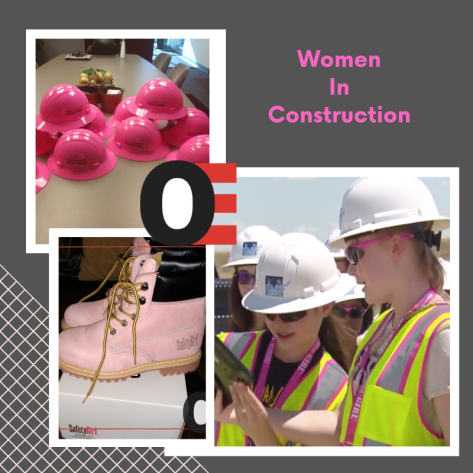
Women in Construction OE Blog Post Collage


My Journey as a Commercial Construction Contractor and Business Owner

When I was in high school, I joined the Manual High School theater club and was instantly attracted to the building aspect of theater. I had roles in costume creation, set design & construction, and production management. I now look back and see that even at the young age of 16, I was destined to be in construction. 

For college, I went to the University of Colorado at Boulder to study Structural Engineering. I remember going to an AGC meeting my sophomore year (for the free pizza of course) and said, “Why am I here….I’ll never go into construction!” During the summer after my Sophomore and Junior years, I had a full time Civil Engineering internship. It was during this hands on engineering work that I discovered that I hated engineering! I loved the academic side of engineering; the classes, the problem sets and homework, the projects but I hated the real world application of my future profession. 

It was during my Senior year at CU that I went to one of the construction management professors for some advice. We changed my senior classes to include both my required structural engineering courses but added some construction courses like scheduling and estimating. I was in love with CM and took my education to the next level and graduated with a Construction Engineering & Management Masters degree from Stanford University in 2000. 

After graduation, I joined a large commercial general contracting company in Denver where I spent 15 years of my career. When I first started out of school, one aspect of construction I had a lot of frustration with was that I couldn’t just go read a book or take a class to learn “construction”. This is a profession where you have to put time in the trenches, get your hand dirty, make mistakes (many of them) and learn from each one on how to be better the next time. It is only after “doing” that you learn construction and that is what fascinates me 20 years later; I still learn something new with every project. 

In 2015, I was presented with an opportunity to be a business owner of a subcontractor. This life change has allowed me to mentor other people in our industry, build a company that I am proud of, provide a fun place to work for my teammates, and become a go-to sub for my clients. 

So, if you are a young woman looking at construction as your potential career path, take a look around you and connect with programs and resources at your school, and other outside programs. There are great resources such as Transportation and Construction Girl (https://constructiongirl.org/), and Associated General Contractors Construction Careers Now (https://www.buildcolorado.com/). 

Ask your family and relatives if anyone they know is in construction. Check out community college programs and college certificate programs (there are many out there) and most importantly don’t give up!  There are so many career opportunities in construction, positions from the back office (accounting, administration, engineering, estimating, project management) to the field office (apprentice trade programs, field workers of all types, coordinators, field engineers, surveyors, foreman, superintendent and so on). 

Stay tuned for more women in construction stories, this is just the beginning, come back for more.

Terri Olson – OE Construction Corp.
OE Construction Corp

Is the Construction Industry Another ‘Boys’ Club’?

It doesn’t have to be!

Law, high finance, technology, engineering… even science and medicine. In many circles, these industries are viewed as being in the exclusive domain of men. Many are making inroads into changing those views. Banks on Wall Street, for example, are hitting parity when it comes to hiring of men and women.

Other industries aren’t as successful. Technology is a good example. According to author Emily Chang, in her book “Brotopia: Breaking up the Boys’ Club of Silicon Valley”, women represent only 25% of technical hires and receive less than 2% of venture capital funds for startups. And the glass ceiling is staying pretty firmly in place in the C-suite as well. Forbes Magazine indicates that? “Out of the Fortune 500 today, women CEO’s number just 24, down from 32 a year ago.”

Sadly, the construction industry isn’t boasting better numbers… Yet. So what’s it going to take? 

A top down change in attitudes

If you want women to be comfortable in your business, you need women at the top and you need to include them as part of your hiring strategy. This can effectively alter the ‘brotopia’ boy’s club that tends to form in male dominated industries. man and woman construction worker oe

Engineering programs are graduating women in greater numbers, so the candidates are out there. According to the American Society for Engineering Education: “Females were awarded 19.9 percent of all Bachelor’s degrees awarded by an engineering program in 2015 and made up 21.4 percent of undergraduates enrolled in engineering.” (Source

After all: “…according to the Peterson Institute, companies who were in the top 25% in gender diversity of their workforce were 46% more likely to outperform their industry average.” (Source)

There’s a bottom line advantage to hiring more women at every level of your organization, but it has to start with an attitude change at the top.

Women need to blaze a trail

As much as construction companies need to lead by example, women have to be willing to blaze a trail if they want to see a change. One of the ways they can do this is to build their own companies within the industry and, by default, have control over the hiring, setting the standard for parity from the get go. It requires confidence to go into an industry that favors men, stand up and be noticed, but it’s worth the effort.

woman construction worker on job site

I don’t know who said it, but this is true: “Good things come to those who wait. Better things come to those who work for it.” Every industry can use a little disruption! We can tell our girls they can be anything, but if we’re going to walk the walk, as well as talk the talk, we had best get our work boots on and get to it! At OE Construction, we believe in a balanced workforce that better reflects our society and we are always excited to work with organizations like “Transportation & Construction GIRL”, through the HOYA Foundation, to promote careers in construction for women.

OE Construction at Construction Girl 2018
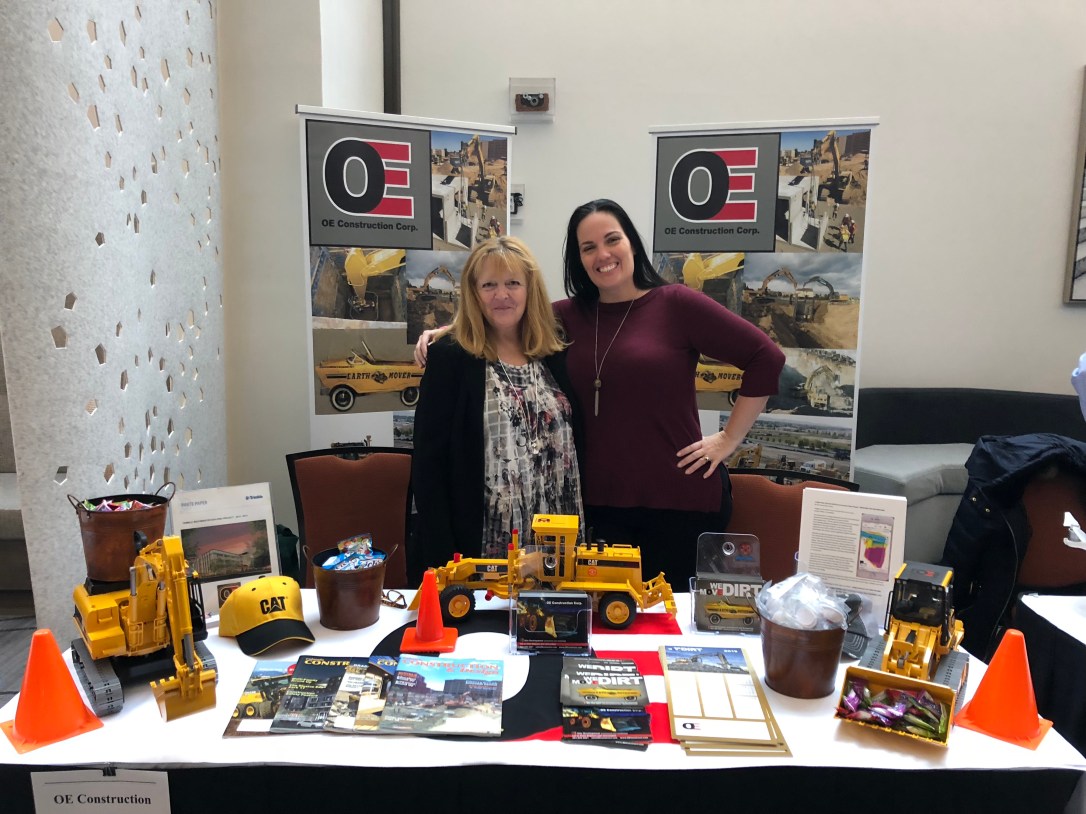
Terri and Laura working the OE Construction booth