Blog

OE Construction Corp

The Future of Construction Goes Beyond Building

For many people who work outside of construction, it might not occur to them that the industry has impacts that reach much further than the building of roads, skyscrapers and homes.

In fact, by embracing new technology and new ways of viewing the world, the construction industry is in a position to set the standard for others to follow, when it comes to the use of technology, and its impact on economics, other industries and the environment.

The World Economic Forum issued a report called “Shaping the Future of Construction: A Breakthrough in Mindset and Technology” that said, among other things:

“The world is changing faster than ever before. Consider just one of the global megatrends shaking up the construction industry: the population of the world’s urban areas is increasing by 200,000 people per day, all of whom need affordable housing as well as social, transportation and utility infrastructure. In the face of such challenges, the industry is almost under a moral obligation to transform.

Its transformation will have transformative effects elsewhere: on the wider society, by reducing construction costs; on the environment, by improving the use of scarce materials or by making buildings more eco-efficient over time; and on the economy, by narrowing the global infrastructure gap and boosting economic development in general.”

Three areas of innovation stand out in terms of their maximum impact to the industry, and the world around us:

Automation

There is a lot to be gained from automation on the construction site, not the least of which is productivity. Using automation and robotics to engage in repetitive or remote tasks has advantages that are measurable against the bottom line of a project:

  • Machine monitoring can prevent rework and downtime costs due to error or machine failure.
  • Accuracy and precision of a task is improved.
  • Safety is improved by increasing overall monitoring, local and remote, to ensure that everything is being completed according to approved specifications or within tolerance limits.

Trimble Tablet OE Construction USING 3-D MODELING, GPS TECHNOLOGY AND HEAVY EQUIPMENT MACHINE CONTROL IN THE FIELD

“Komatsu, a Japanese manufacturer of construction equipment, is developing automated bulldozers incorporating various digital systems. Drones, 3D scanners and stereo cameras gather terrain data, which is then transmitted to the bulldozers; these are equipped with intelligent machine-control systems that enable them to carry out their work autonomously and thereby speed up the pre-foundation work on construction sites, while human operators monitor the process. On mining sites, autonomous haul trucks are already in common use.” (Source)

3D Printing
3d printingOne of the major costs in construction is the raw materials used. By leveraging technology like 3D printing, even if only for components, major cost savings are available to companies of all sizes. Speed, accuracy, and less waste are all functions of being able to create materials on a needs basis.

“The technology enables the production of purpose-built shapes that cannot be produced by any other method; it promises productivity gains of up to 80% for some applications, together with an important reduction in waste. Construction time for some buildings could shrink from weeks to hours, and customized components could be provided at much lower cost.” (Source)

The ability to create and leverage newer forms of materials can affect the economics of a project, the quality of the final result, and the environmental impact as well. The construction industry worldwide is the largest consumer of raw materials and resources (renewable and non-renewable). By engaging and indeed encouraging the production of higher quality materials, based on new technologies like 3D printing, even small changes can make a big difference.

Why? The US construction industry produces a total of 40% of the solid waste for the entire country.

“Throughout the world, such waste involves a significant loss of valuable minerals, metals and organic materials – so there is great opportunity to create closed material loops in a circular economy…

Increasingly, sustainability is becoming a requirement rather than just a desirable characteristic, and its pursuit is bound to affect both the construction process and the built asset itself. The construction sector produces an enormous amount of waste, so the more efficient use and recycling of raw materials, even a small improvement, offer huge potential benefits. ” (Source)

Big data and digitalization of the worksite

Above, we mentioned that machine monitoring as a part of automation can have a major impact to productivity but digitalization of projects can go so much further both in terms of productivity and cost savings. That’s because it can be leveraged throughout the construction cycle, from early design, preventing issues that might otherwise slow down productivity, create waste through errors and so on. Scope, time and costs can all be monitored at a granular level, ensuring that budgets and schedules are adhered to without compromising quality or safety.

“New methods of simulation and virtual reality help to identify interdependencies and clashes (clash detection) during the design and engineering stages, and enable a virtual experience of the building even in the early design phase. By exploiting mobile connectivity and augmented reality, companies can engage in real-time communication and provide workers with additional on-site information.” (Source)

“According to a recent study, full-scale digitalization in nonresidential construction would, within 10 years, be capable of producing annual global cost savings of $0.7-1.2 trillion (13-21%)“ (Source)

All planned aspects of a project, from general management to figuring out human resources required, as well as materials, suppliers and subcontractors, can all be sped up and developed more accurately with digitalization and the use of real time data. Even from project to project, best practices and standards can be shared and leveraged, to save time and resources.

What stands in the way of this change of mindset?

While change can inspire fear, it can also be the foundation to champion future generations to grow in an industry that is without limits and will always have huge impacts on the economy, locally and around the world. The construction industry affects so many others—it is considered a horizontal industry, for that very reason!

“To mention a few, residential housing accounts for 38% of global construction volume; transport, energy and water infrastructure 32%; institutional buildings 6%; commercial buildings 12%; and industrial sites (from cement to automotive manufacturing) 13%. For all of these sectors, value creation almost always occurs within or by means of buildings or other constructed assets.” (Source)

Finding ways to get past the bias that might favor traditional methods is the step forward that we all need to take to keep moving forward as a vital industry in the United States and beyond.
OE Construction Corp

The Value of Construction Work

So many people in this country, as little girls and boys, played with LEGO or other construction kits. We were all about building something lasting and real, using our imaginations to create all manner of buildings, vehicles and fantastical homes.

Years later, many of those same people might have viewed the world of construction as ‘manual labor’, as ‘blue collar’, as ‘less’. They would choose other ways to earn a living, pursuing higher education in the hopes of become ‘more’.

What so many people who used to love building for hours don’t realize is the satisfaction that comes from doing a job where you actually have a tangible result: something real that you can touch and feel, something that makes lives richer and better for others.

Some of the misconceptions about the construction industry

There are so many misconceptions about this industry, but here are you might have come across:

  1. That construction workers are a group largely made up of unskilled labor — WRONG! Construction includes so many skilled work fields, from engineering to plumbing, electricians to planners. As time goes on, and construction leverages more and more technology to get the job done, the need for skilled employees is only going to grow.
  2. Construction work is very dangerous — WRONG! That’s not to say that there aren’t risks in construction, and without the proper precautions taken, including safety training, injuries do happen. But companies who engage in any facet of the industry today are aware of the importance of safety and make it a priority.
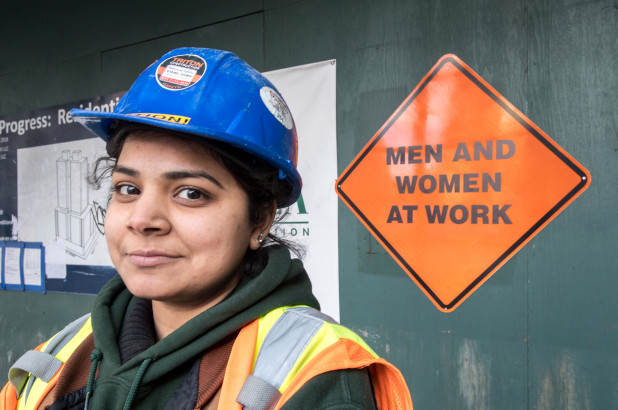
  3. Construction is only for men — WRONG! The industry is changing and, in fact, will always benefit by being more diverse in its hiring practices. It’s not about brute strength anymore: it’s about skill, intelligence and pride in work! Of course, the industry can always do more to be inclusive. One Manhattan company has taken a solid step forward in becoming more female friendly by changing all their ‘Men at Work’ signs to ‘Men and Women at Work’.

NY Post Construction Image for OE blog

(SOURCE)

  1. Construction is an environmental disaster — WRONG! There are plenty of ecologically sound practices that are incorporated into construction projects, to help ensure that the environmental footprint created is small. Sustainable practices, eco-friendly designs and reduction of impact through leveraging of technology are all ways that the industry is moving forward and evolving.

Success comes in many formats. It’s not because you wear a suit or don’t work with your hands that you are successful. Workers in the construction industry are well paid, in demand and are creating a level of skill that is unparalleled in any other industry.

Heavy equipment operator Eric Borden Pasture Poet wrote the poem “Ditch Diggers” to honor the men and women who work in the construction industry. He puts into powerful words the pride that comes with working in this great industry and calls on those outside of the industry to rethink the misconceptions, like those mentioned above, they might have about it.

At OE Construction, we salute all those men and women who used to be girls and boys, playing construction. They are the foundation of an industry that creates the very world we live in today.

OE Construction Corp

Career Explore Star Night – A Construction Company WISH

The staff at OE Construction attended the May 2nd Career Explore Night, which was a combination of private companies, Jeffco schools, many Jeffco School to Work programs, the Jeffco Schools Foundation and most importantly Jeffco high school students.

The evening brought all of us together to honor students from Arvada, Chatfield, Dakota Ridge, Golden and Wheat Ridge High Schools for all of their accomplishments throughout the year. The Career Explore program provides opportunities for students to become engaged in work-based learning activities that lead to industry certifications, internships, a pathway to employment and post-secondary learning opportunities.

OE Award Pic - Gold Sponsor

Our personal wish is that even more private companies become engaged and support this program. Right now the focus is in the medical, hospitality and construction industries. I personally took a different path to end up in the construction industry. I entered into a school and work place advancement program back in the 1970’s (a long time ago!) which led to a 25 year career in computer software and hardware technology, building and running companies in the technology sector of private business.

When my son was a student at Wheat Ridge high school many years ago, he too took a winding path which led him to the construction industry. With the help of Jane Johnson and others at WRHS, he worked in the construction industry while in high school and went on to complete multiple construction certificate programs at Colorado State University and Red Rocks Community College. This path led him to starting and running an excavation and underground utility construction business. We kept telling him, work hard, build good teams, listen and ask for advice and don’t ever give up. I joined my son in the business in 2007 as an investor and Vice President of Accounting and Operations.

Let’s give back to our schools, communities and most important the students who have so many paths ahead in their lives and careers. Get involved and make a difference, last night we saw what all of us can do together.


Construction Girl 2018, OE Construction
OE Construction Corp

Breaking Barriers: Girls in Construction

As of right now, only about 9% of the workforce in construction is made up of women. That’s 1 out of every 100 workers. There are a lot of reasons for this disparity, including the perception of construction as being a traditional male job, bias in hiring and workplace cultures that don’t favor women.

However, the many opportunities available in construction for women, with tremendous growth opportunities to learn new technologies and work in an ever evolving landscape, are important. The starting salaries alone make a career in construction worth considering:

  • Brick Masons $80,000;
  • Project Manager $90,000;
  • Estimator $75,000-$90,000;
  • Architect $75,000;
  • Electrician $58,000;
  • Civil Engineer $81,000;
  • Drone Operator $82,000;
  • Tower Crane Operator $77,000.

Does it matter if construction is a diverse industry?

In a word, yes. The benefits of creating more gender diversity in the construction industry go well beyond the notion of supporting basic human rights, providing lucrative opportunities to everyone and inclusion. There is a “bottom line” economic benefit for the industry as well.

“…according to the Peterson Institute, companies who were in the top 25% in gender diversity of their workforce were 46% more likely to outperform their industry average.” (Source)

 What can companies do to become more diverse?

The kind of change that is required to create a more diverse and inclusive hiring process and work environment is the kind of institutional change that only happens when it’s embraced at the highest levels of an organization.

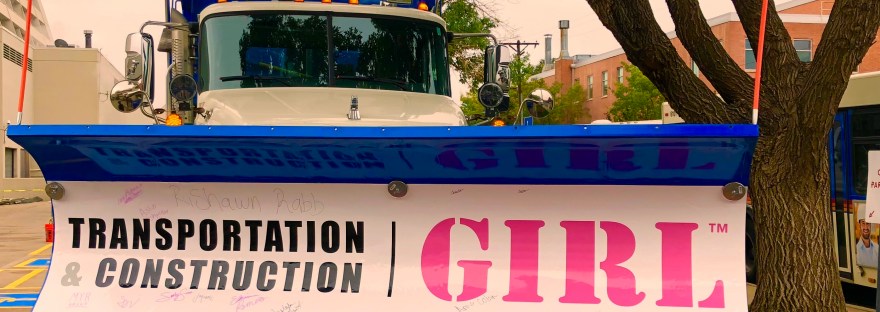
At OE Construction, we believe in a balanced workforce that better reflects our society and we are excited to work with organizations like “Transportation & Construction GIRL”, through the HOYA Foundation, to promote careers in construction for women.

OE Construction at transportation girl and construction girl 2018
Laura at OE Construction connecting with young women

In addition to scholarships to promote the education of girls to join the construction and transportation industries, the HOYA Foundation runs a spectacular event to highlight to girls the advantages of choosing a career in the construction / transportation industry.

This July, the Foundation will be hosting Career Days for Girls: “Over one week, girls – ranging from eighth grade to 20 years old – make five stops to engage with women, ask questions and tour work sites. Each company puts together a day long insight into their company and into the industry.”

OE Construction is proud to be a Gold sponsor for this event.

What qualifies a girl to participate in Career Days for Girls?

  • The candidate must be female, between the ages 13 – 20.
  • They must have transportation to host companies and a parental release and consent form signed.
  • Each participant will write short essay at end of week.
  • There is no cost to participate if selected, but with only 12 spaces per session, it’s important to get in your application by the deadline of May 3rd!

The future is bright for girls and women to become part of our growing and fascinating world of construction, one which shows no sign of slowing down and which offers opportunities for its workforce that are unparalleled in other industries.

OE Construction at Construction Girl 2018
Terri and Laura working the OE Construction booth


OE Construction Corp

Are Drones the Next Evolution in the Construction Industry?

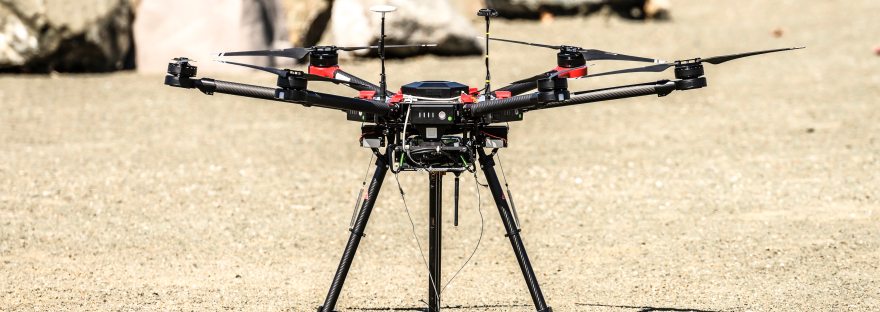
The use of drones in construction is growing at a fast rate, faster than anyone predicted.

“…construction drone usage has skyrocketed by 239 percent year over year, compared to 198 percent in mining and 172 percent in agriculture, according to a May report on commercial drone trends by DroneDeploy” (Source)

Only a few years ago, drones weren’t found much of anywhere outside of the realm of hobbyists looking to take their interests in remote control airplanes and helicopters to a new level. Today, they’re a ubiquitous tool throughout the construction industry.

And while they were an expensive addition to the site only a decade ago, with units ranging around $10,000 or more, drones today can cost anywhere from $400-$1000, with a couple of hundred a month in the cost of cloud based software to collect, transmit and analyze the data and images collected.

With this relatively low cost and given the high quality of data that is captured by a unit including photograph / video capability, the value is obvious. A construction site seen from ground level is an entirely different proposition than what can be seen from up high. In the past, aerial images were obtained with airplanes, at a serious cost and with less maneuverability and flexibility. After all, you can’t get a plane to hover over a specific spot in the distance to take multiple images but with a drone? That’s easily accomplished.

Ways drones are currently being used in construction

Land surveying — creating the high level view, quickly, more accurately and with less cost than more traditional ground level methods. 3D models are quickly created and any impacts to areas surrounding sites, including environmental ones, are discovered and managed.

Communication — because drones can provide real time data and images, they are practical for on-site communication, management and monitoring of the site and the workforce. With improved communication and workflow, it’s possible for companies to complete projects faster, which is a benefit to all involved.

Safety and security — monitoring a site allows two other advantages for the persons who are leveraging the data returned by the drone: security of a much larger area can be maintained more easily, reducing theft and vandalism concerns; and any safety issues are easily discerned before they become a problem, as well as allowing the surveying of areas that might not be safe for people to access.

Transportation — to a certain extent, drones can be used to transport goods or information from one part of the site to another, quickly and easily.

The future of drones in construction

Beyond photos or videos of sites, the equipment available for drones is getting more and more sophisticated. Thermal imaging and 3D model production are just two other ways that drones are being leveraged in the field right now.

And the future is bright for including drones in construction, with the wider availability of artificial intelligence and machine monitoring to both speed up and simplify the acquisition and analysis of site data, even venturing into the area of predictive maintenance of equipment. Automated construction sites, where drones control robot construction vehicles, aren’t an idea in science fiction.

“Japanese construction giant Komatsu will receive 1,000 aircraft to help survey and monitor their projects. There are also plans in place for these drones, known as the ‘Skycatch Explore1’ to control robotic construction vehicles. If successful, this could pave the way to a fully automated construction site.” (Source)

For the construction industry, the use of drones and other technology will necessitate the recruiting of a skilled workforce who can manage these new tools in the field. This represents an opportunity for people who are interested in technology to expand their range of career options to include construction.

While drones will never replace the essential skills of humans, they can be a cost effective addition to a construction site that will help companies cut costs, bid more efficiently and see a higher profit margin in ever more complex projects.

OE Construction began using drone technology a couple of years ago. One application is to verify job site conditions, another is to provide work progress videos for our customers. We have even used drones to provide site survey information on larger job sites: what used to take a day to complete can now be finished in two to three hours. The accuracy and the type of data that is compiled from drones can result in time savings and improved job site construction in the field.  Plus, it’s pretty cool to make a drone video!

Learn more about us on our website!