A Business Case for Construction Technology that Delivers 30% Efficiency Improvements
By Chris Olson
Here’s how it all began.
Equipped to Perform
The Trimble Rockies Campus earthworks and utility portions of the project included moving approximately 27,000 cubic yards of dirt and approximately 6,000 cubic yards of borrow material. The building pad was over-excavated by 5.5 feet below finished grade and backfilled in 1 foot compacted lifts. The operations plan called for stripping the site by approximately 0.5 feet and stockpiling the material in the southeast corner. The idea was to cut from the north side of the lot to fill the building pad and south side of the project. Our crews would need to borrow material from an offsite borrow pit to compensate for the material shortage on site. They would also carry out the utilities work for storm, sanitary and water, build the retaining walls, grade the parking area for the curb laying operations and trim the parking areas and roadways in preparation for the paving operations.
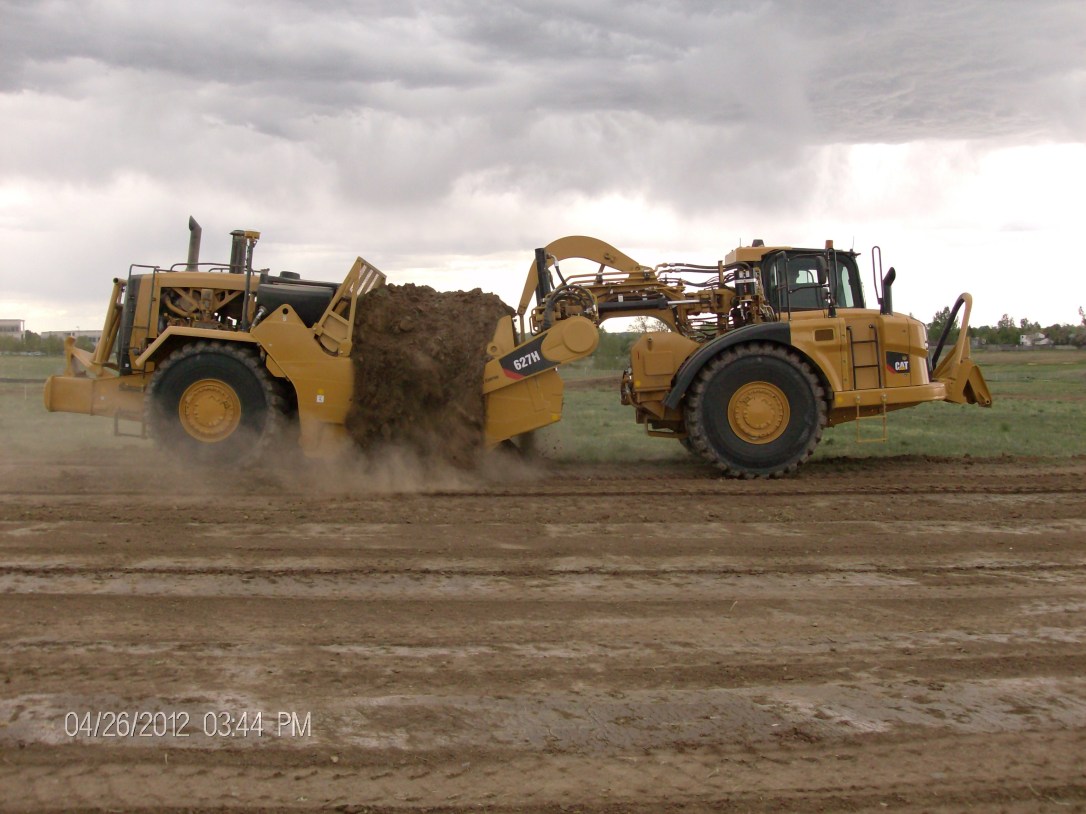
The machine fleet on the project consisted of a motor grader, dozer, wheel-tractor scraper, soil compactor, excavator, wheeled loader, and a skid steer loader.
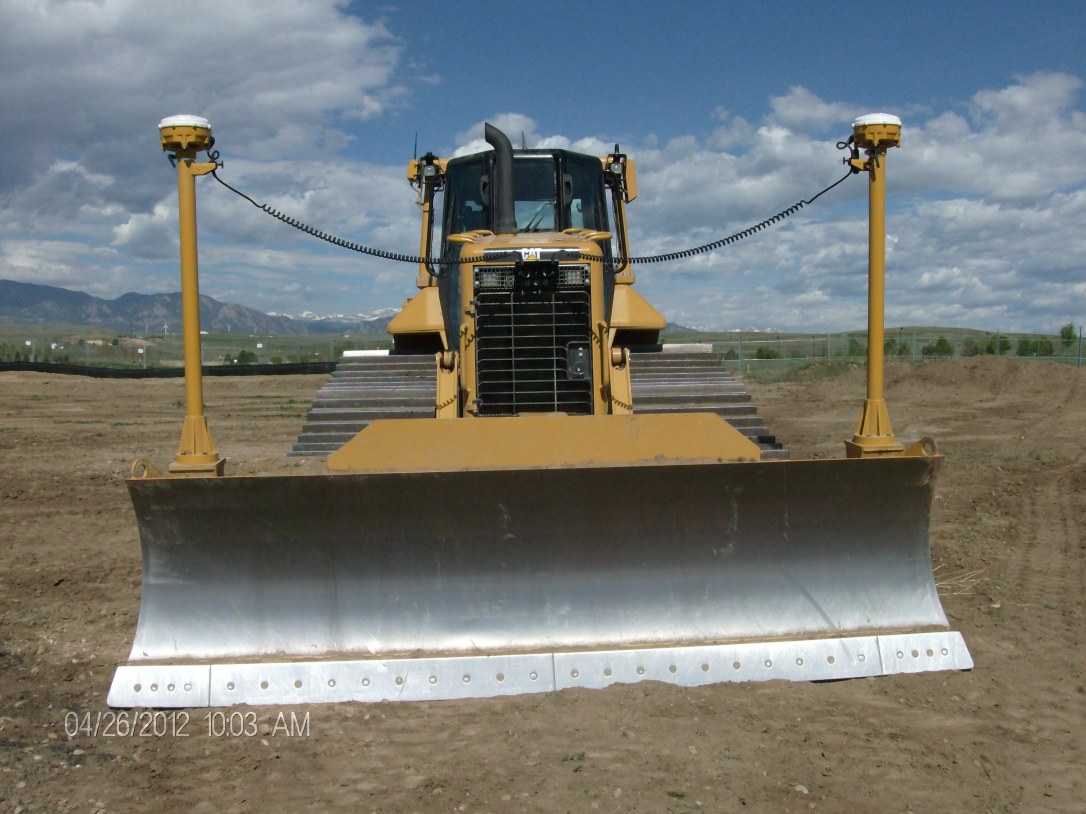
The use of the 3D grade control systems allowed the OE crew to skip rough grade and cut the site directly to finish grade in a single activity. The full adoption of 3D site work design and management techniques further helped the team develop an optimized plan for cutting, soil distribution and placement and ultimately place finish grade within one quarter-inch of the specified elevations.
All earthworks machines were equipped with Trimble® SNM940 Connected Site® Gateway hardware and 3D grade control systems. The Trimble Connected Site Gateway brings the office and the machine together with remote machine support, and integrated data flows for machine and off-machine activities. Field crews would also capture information from their soil compactor, using the Trimble CCS900 Compaction Control System.
In addition, the sitework crew relied on Trimble’s Connected Community to track project progress and site activity in real-time and online with greater efficiency and ensure all information was readily available to all team members on and off the site. Business Center–HCE office software from Trimble was used for data preparation and takeoff, and to prepare and manage all the design files for the Trimble project.
Operational Objectives
As is typical on many earthwork projects, the sitework team received 2D CAD design files from the project engineer in advance of project go-ahead. One of the main challenges in working with the information provided by the engineering team is that there is often insufficient information in the CAD files especially with respect to the development of the subgrade model.
For example, the building area sidewalks and drainage swales had too little information to model in detail, with incorrect contours and too many nodes, which created problems with subgrade surfaces.
The OE project team used Business Center-HCE to import and clean up the 2D CAD design files. A PDF document was draped over the surface model to identify areas where more information was needed from the plans. Then, CAD linework, elevation labels (curbs and walls), contours for landscaping, and the plans were used to infill missing details such as island walkway slopes and drainage swales. For subgrade adjustments, the finished grade model was adjusted for material thicknesses. Parking bays were designed to 6-inches, heavy duty parking 7-inches, concrete slabs 6-inches, walkways 4-inches, topsoil re-spread 4-inches, riprap, and machine test areas 12-inches.
The Business Center-HCE’s data preparation capabilities made the models viable for construction and greatly improved the information used by the machines and controllers in the field.
The team documented some valuable lessons learned during the process:
- Have a solid project template to start
- Read the plans in addition to the CAD files as they contain information to help solve most issues that arise.
- Using the software takeoff capabilities on the final model will drive the greatest efficiency in the data preparation functions.
With Business Center-HCE, the team was able to build 3D models that accurately represented the Trimble site in just three days and identified problem spots such as areas of poor drainage and pooling areas—before ever turning on a machine.
Multiple Models
Three-dimensional models were developed for excavation, subgrade and finish grade as well as a trench and pipe model to mark utilities.
- Mass earthworks and over-excavation – Using the design specification documents and provided drawings, a subgrade adjusted model showed asphalt, concrete, topsoil, and other construction material thicknesses. The model was used in all of the earthmoving machines for the bulk earthmoving and excavation operations. In addition, the building needed to be over-excavated and backfilled with compacted material, so an over-excavation model was created to allow the machines to cut out the building area and backfill to grade.
- Subgrade model – the finished design surface model is adjusted for grading operations. It allows for seven inches of asphalt in main traffic areas of parking lots, six inches of asphalt in actual parking spaces as well as 4-6 inches of concrete in island walkways and concrete pad areas for the loading bays and buildings.
- Finish grade model – shows all of the finished surfaces on the project including roads, parking, walkways, islands, loading bays, and all landscaping and retaining walls. The 2D CAD files and PDF plans were imported into Business Center- HCE where it was clean, sort and elevate the provided information, creating a digital 3D model. Three-dimensional linework for curbs, walkways, islands, drainage swales, retaining walls, ponds, building foundations, landscaping, and concrete loading bays are used to create a 3D surface model.
- Trench model – This model shows coordinated, location, depth, width, and size of pipes drainage inlets and manholes for the job site. Precision in this pipe and trench model is important to meet OSHA requirements for accurate cutting of trench slopes and for setting pipes and manholes or inlets at the correct elevations and slope.
To the Field
In the early days of the project, a professional survey firm established six permanent control points across the project. A GPS base station located on top of the old Trimble building across the street would run 24 hours a day. OE calibrated the site GPS to 0.02-foot in 3D.
During the six-week earthworks process, grade control systems were used on the dozer, excavator, motor grader and scraper. The system utilized dual GNSS to measure the exact position, cross slope and heading of the blade for rough grading and mass excavation on steep slopes and complex design surfaces.

The excavator was used to cut trenches and trench slopes, while a dozer equipped with the grade control system displayed design information and live cut/fill indications in the cab for machine operators. The system gave the operators real-time warnings for prevention of operation or movement into avoidance zones. It also collected as-built data as the machine cuts to grade.
For grading with the dozer, the machine control system allowed the operators to grade faster, without a single stake in the ground. The on-board control box determined the position of each tip of the blade and compared it to the design elevation to compute cut or fill to grade. The operators then used cut/fill data to drive the valves for automatic blade control, with light bar indicators providing visual guidance to the operator.
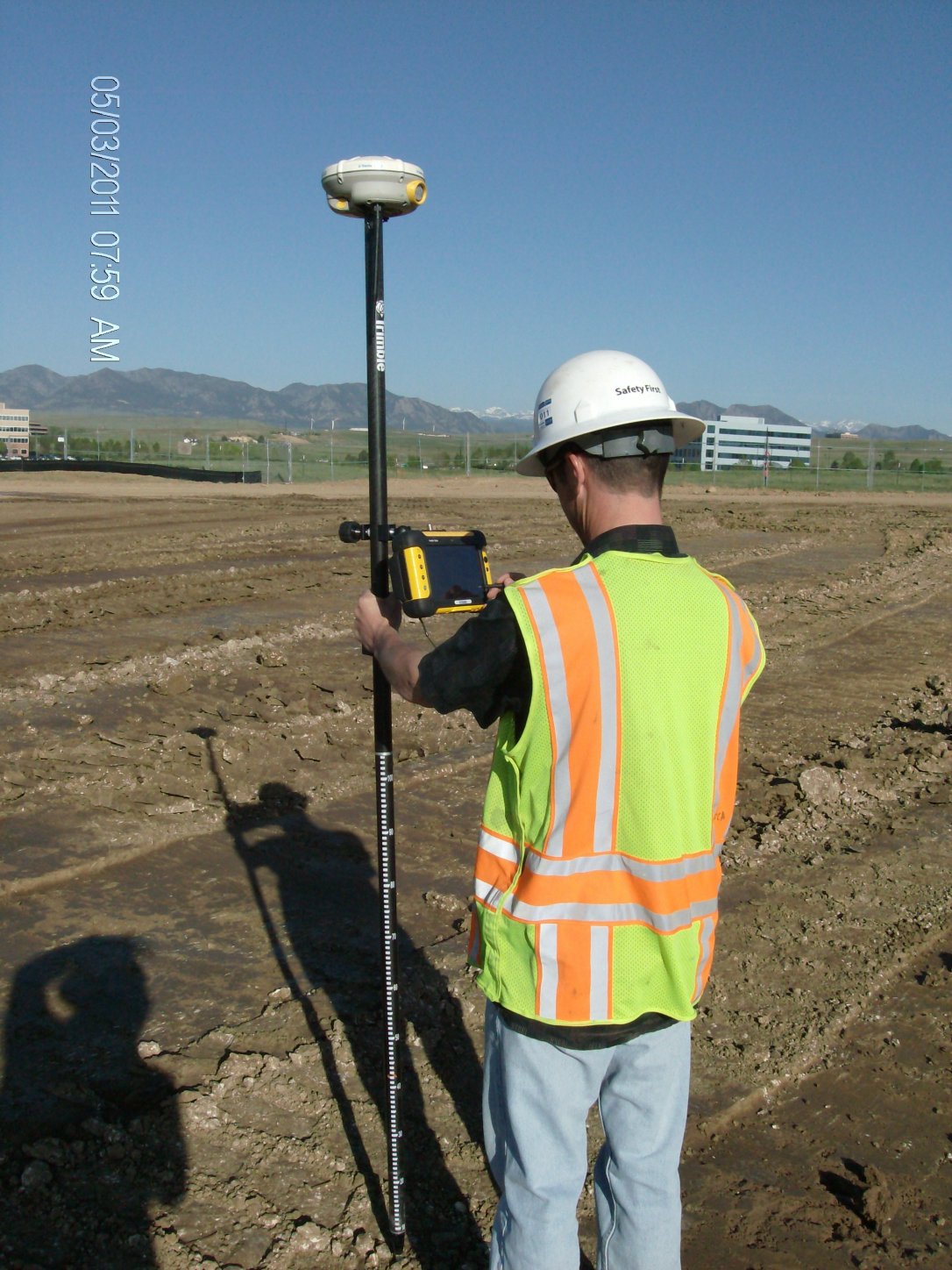
During earthworks operations, the OE team used the Trimble Tablet and the Trimble SPS882 GNSS Smart Antenna to check the machines and monitor progress in the over-excavation areas and grading areas of the parking lot. On completion of an area of grading or a utility line installation, they used the rover to carry out as-built measurements to prove and record completion to the required tolerance.
Prior to using the Trimble Tablet, we kept 3D models on a central computer in the office or onsite trailer but were rarely able to update shared models and files during construction planning or to identify problems during actual construction. With the Trimble Tablet, we can measure points, widths, and tolerances, and then go back to the plans immediately to check the specifications from the field.
The Trimble Tablet running the Trimble SCS900 Site Controller Software was used to pull up plans, submit approvals, access as-built measurements, compute stockpile volumes and check finished grade.
The OE job site supervisor believes that having all of the models prepared and in the machines from day one allowed his team to work anywhere on the job site at any time without having to wait for surveyors to come and set stakes – a flexibility that saved time and kept machines and operators operating at a high productivity rate. He reflected that it was the first time that he had time to run a machine to help complete work.
With Business Center- HCE and machine control, the OE earthworks team was able to cut the excavation schedule on the project by more than 30 percent. They were also able to monitor and track the level of earthworks progress happening onsite by using Trimble’s VisionLink software.
Managing the Fleet
On the Trimble project, OE also used a web-based fleet, asset, and site productivity management tool called VisionLink to compute site productivity, material quantities, and materials movement. We were able to track and monitor machine location, usage, fuel and hours for scheduling, and see precisely how much dirt was being moved each day. We were also able to monitor asset utilization and minimize idle times of machines, reducing unnecessary and costly fuel burn. In addition to using machines more efficiently, we captured data for 3D project monitoring.
The asset tracking will allow the company to increase the productivity of the entire machine fleet.
We were able to monitor and record 3D earthmoving, grading and finishing operations, create a near real-time 3D surface model, delivering both elevation and cut and fill maps to show progress towards completion.
In the future, we plan to use even more detailed information about cycles and loads to gain greater insight into material quantities and materials movement to make informed decisions about production efficiency.
Delivered with Impressive Precision
During the six-week excavation phase of the Trimble project, the OE team achieved significant productivity gains thanks to construction technology. Trimble Connected Site solutions, including data preparation, asset management, and collaboration software, provided the foundation for a more integrated and effective operation. The site positioning and machine control systems worked within this streamlined framework to provide a high-level of workflow integration that delivered significant improvements throughout the construction lifecycle.
The finish grade work was completed four and a half weeks earlier than scheduled and to within one quarter-inch of the specified elevations, allowing the parking lot curb and gutter to be installed at the same time the foundations were poured. Early completion of curb and gutter allowed the base lift of the parking lot asphalt paving to be installed concurrent to steel erection.
Happy with the productivity gains enabled by Trimble technology, OE has fully adopted 3D project design and management. We purchased the excavator and compactor systems from the project as well as a second Trimble base and rover system with the Trimble Tablet field computer. Rounding out our portfolio of products, we now have eight 3D machine control systems as well as two seats for Business Center- HCE.
Construction of the Trimble Rockies Campus began on April 24, 2012, and finished on April 25, 2013. On May 6, 2013, approximately 500 Trimble engineering, marketing and sales team personnel moved into the new headquarters – several weeks ahead of the 13-month planned schedule.
For more information about the Trimble Westminster Building Project, please download a whitepaper here.
Author
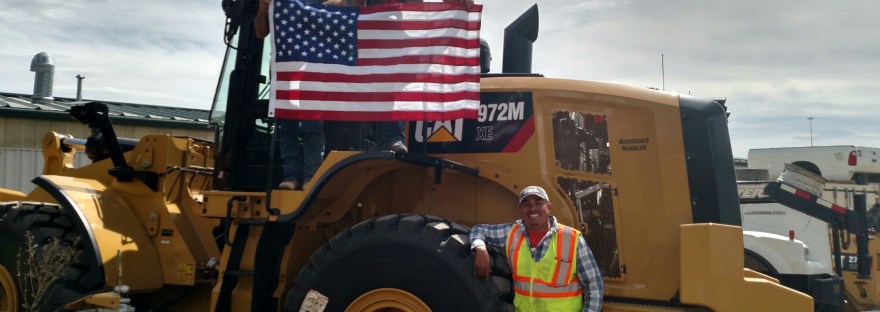
Chris Olson, owner of OE Construction Corp., can be reached at chris@oeconstruct.com.






 OE Construction Corp.