OE Construction Corp

What’s in the Forecast for the Construction Industry?

According to the Wells Fargo annual survey results, the forecast calls for optimism.

In fact, the OQ (optimism quotient) for 2019 is 122, which is strong. Any result over 100 indicates strong optimism for the industry, so this year’s result is promising. Industry executives overwhelmingly feel that construction, at various levels, is going to expand. Compare that to the OQ from just ten years ago, which sat at 42.

Top results from the survey

In its 43rd year of running, the annual survey provides insight from over 440 industry executives, across 48 states. It’s a fascinating approach to allow businesses throughout the industry to get a sense of direction and flow for their own models. As it also tracks with other economic indices quite closely, it’s a good predictor of the kind of year our industry will have.

The following are the top results from the 2019 survey:

  • The area that executives are most concerned about? Finding enough qualified, skilled workers. To quote the report itself: “The ability to hire qualified workers is the #1 concern among survey respondents in two categories. 47% of contractor respondents cited the ability to hire qualified workers as their #1 cost concern and 36% of all respondents cited it as the #1 risk to their business. They ranked it above the impact of healthcare costs, employee wages and benefits, tariffs, interest rates, and the cost of equipment.” This represents the top business risk for all sizes of companies, within the industry.
  • There is some concern about the impact on business because of tax reforms, interest rates, and tariffs. A significant percentage of larger companies, in particular, feel that the impact of both tariffs and interest rates could post the greatest risks, financially, going forward. There is some uncertainty as to what will be coming down the pipeline, which is fueling the lack of clarity around this concern. Tax reforms and the Highway Funding Bill are at the top of the list in terms of issues that are of greatest importance to the ongoing success of a company. That said, there is reason for optimism, with positive economic forecasts and greater consumer confidence, topping the opportunities that respondents saw.
  • With that said, an increase in equipment spending is still expected, to the tune of 96% of respondents indicating that they would be making purchases (new or used) within the year.
  • Rentals will remain steady, with the companies that aren’t currently seeing a heavy backlog of jobs considering rental to be more fiscally appropriate than purchasing. Distributors, however, are feeling that growth for them is on the horizon.

When asked what will most change the industry in the future and what will drive that change, many responses circled around the notion of technology and automation. Instead of fearing these as elements that might eliminate jobs however, the industry clearly sees this as an opportunity to build stronger workforces that are founded on skill. The key will be to attract a young, educated in tech workforce to an industry that has not traditionally been viewed as tech forward. It is the lack of those available skilled workers, along with ongoing improvements to available technology, that will drive that change.

OE Construction is a specialty contractor in the commercial area of the industry and is thrilled to participate annually in the survey. The resulting insights are always interesting and informative.

OE Construction Corp

Is a Career in Construction Right for You?

For those who aren’t familiar with the industry, there are lingering perceptions around the nature of careers within construction. Some of them are positive, others are not. Ask someone outside of the industry and they’ll describe a construction worker based on old, tired stereotypes of the manual laborer, trudging along a construction site clad in dirty jeans and a hard hat.

Is that what you pictured? The construction industry of today is so far from those old labor-intensive images.

Instead, imagine working with the latest GPS and laser technology to dig and lay the foundations for a new office building, schools, apartments or just about any structure you can imagine? Or handling a robotic-based machine system with cloud based communications and technology interfaces, to measure and build infrastructure that a whole city or area will be depending on? oe construction tech and human touch blog

Sounds interesting, right? The bottom line is that construction isn’t for everyone, but it could be the right industry for you.

  • Do you like the idea of making a good salary, quickly? Skilled trade workers and equipment operators are among the highest paid in any industry.
  • Do you like the idea of working in an industry where jobs are plentiful, stable and aren’t likely to be going away any time soon? An industry that is diverse and welcoming of people at all ages and stages of life?
  • Do you like landscapes that change, projects that challenge you with new technology and devices, and some travel mixed in, with not a single office cubicle in sight?

Don’t look now, but you might be suited to a career in construction!

With established skills in construction, you can look forward to progression in your career including management opportunities, international projects which will take you to fascinating locations, and a constantly evolving industry that welcomes change and new tools to ensure that it is less the backbreaking work of the past and all about the technology of the future.

When it comes down to it, for the individual, there is a lot of job satisfaction in doing the kind of work that involves building something real: you can see it happening right before your eyes and know that you had a role in it. Compared to sitting at a desk pushing paper around, and where the outcome of your effort might never be seen, there’s a lot that is gratifying about construction industry roles.

Construction is a growth industry with a huge range of career opportunities, with a lot of more complex and technical roles becoming the norm. Companies like OE are working hard to recruit skilled construction workers but we also believe in training and mentoring younger, less experienced individuals, to help them become strong and contributing members of the industry.

We also like to engage with organizations like Career Explore, a group that helps high school students examine the possibilities of careers in non-traditional industries, exposing them to opportunities they might not otherwise be aware of.  The founder of OE Construction started with a construction based math class in high school and never looked back. It was on to a certification in Construction Management with a well known college here in Colorado. A bit non-traditional, working in construction during the daytime and taking construction based courses in the evening.  

You can get ahead in construction with hands on experience and if you want, college construction based courses, community college trade programs and other outside trade programs run by some of the best in the industry.  Don’t box yourself in, there are many options and you can direct the right path for you. All it takes is the initiative to learn, a commitment to working towards a goal and a good work ethic.

Currently, OE Construction is actively seeking workers in the following roles: Equipment Operators, Laborers, Pipelayers and we’re always looking to discover and grow new talent.  Check us out at http://www.oeconstruct.com, call, email or come by our Golden office to fill out an application.

we're hiring oe construction

OE Construction Corp

2019 Wish List From a Safety Consultant

In a perfect world, industry across the board would have a zero injury rate. It’s a reality however that construction in particular is a physically demanding industry where long hours, large machines and dangerous situations are all part of the package.

It’s also an industry that experiences a lot of attrition, with people leaving the jobs if and when they find other less taxing work, forcing companies to hire more and more people with less and less experience.

One way many companies have tried to mitigate this last reality is by implementing mentoring programs. The less experienced worked shadows someone with more experience, gaining a lot of insight and knowledge, rather than simply being thrown into the fray to sink or swim.

“Johnny Meador started working in construction when he was 15 years old. Forty-five years later, Meador shakes his head at the risks he and his former co-workers used to take. Safety was not exactly a priority back then. “Anybody in their late 50s or 60s or 70s can tell you how it was,” said Meador, 60, who now works as a safety manager for Charlotte, NC-based Hall Contracting Corp. “Some of the stuff we did when we were young – which the owners had you doing – was insane. If you went through those recessions that we had, you were just lucky to have a job. When you look back, things could have been a lot, lot safer.” (Source)

“Employers in 2017 had 2.8 recordable cases per 100 workers – less than half the number in 2003.” (Source)

The decreasing numbers are great news and definitely something to celebrate, but the goal is and always has to be zero injuries. Construction work is safer than it has ever been, with the biggest gains happening in the last twenty years, but there is always more that can and should be done.

Safety by choice, not by chance OE

We asked Dave Ruddy, safety consultant, what his top 3 important safety points are for 2019. Here’s what he had to say:

“Focusing on safety is as important as focusing on craftsmanship, quality and production.  

My sincere desire for 2019 is that each employee would be strong enough to say no to unsafe work environments, that each employer would be diligent in providing each employee the knowledge and tools they need to conduct their work in an efficient and safe manner and that safety professionals would be encouraging to employees and employers.

Safety is not about compliance, safety is all about the human desire to accomplish a common goal while performing work efficiently and safely.”

It’s this last that really should resonate with all of us: it’s about the desire to accomplish the goal of safety, not just focusing on the numbers or getting complacent with the idea that a company’s safety record is ‘good enough’. It’s never good enough until there are no injuries or fatalities. It’s a mindset and a culture of work that we need to adopt, from the highest levels of any organization, down to the latest hire out in the field.

At OE Construction, safety is a primary concern. We have implemented the STOP™ (Safety Training Observation Program) on every site, with a strong and ongoing commitment by way of:

  • OSHA (Occupational Safety and Health Administration) training, both on the job and in a classroom setting;
  • Weekly safety meetings and audits.

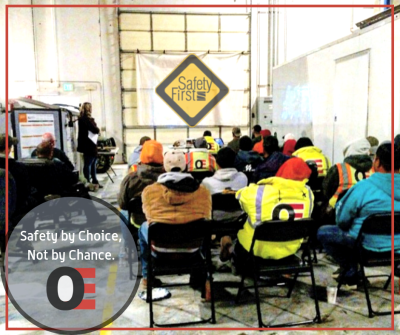
OE Safety Meeting Jan 2019

We’re proud of our current EMR (Experience Modification Rate) rating of 0.84, not because lower injury risk means lower insurance premiums but because it shows that our commitment to safety is effective. However, it can always be improved upon, with a view to keeping all of our team safe.

Construction Appreciation Week 2018
OE Construction Corp, OE Safety Topics

The Sacrifices of the Modern Day Construction Worker

Beginning in 1894, the first Monday of September was designated a federal holiday: Labor Day. While it represents all manner of workers in the U.S., the efforts—and sacrifices—made by construction workers are so important to how this country has grown and evolved that we wanted to make special mention of them.

What distinguishes construction workers from others is the sheer physicality of the jobs they do. While much of the heavy lifting is done by machines these days, workers can end up in difficult and dangerous situations every day, whether that’s at great heights building a tower or depths, digging and excavating. So while the typical pay is high, the conditions for work can be difficult and stressful.

No matter the job, there are sacrifices that these workers make that are universal. Acknowledging them is important because without these workers, so much of the infrastructure that the rest of us rely on wouldn’t exist or would be in disastrous shape.

Working all hours of the day and night

While some workers will have to get up and start very early in the morning, and finish earlier in the day (2:30 p.m.), some construction jobs don’t lend themselves to these hours. A job that has to adhere to sound restrictions, in a residential neighborhood for example, might not work that way.

Other jobs have extremely tight timelines, requiring shifts that run 24 hours a day / 7 days a week. This kind of changeable work can make it hard to maintain a good sleep schedule, something a physical job requires. Starting work at 3 in the morning and finishing at 7 in the evening for weeks on end is taxing. A well planned project shouldn’t expose its workers to this level of time stress, but situations do come up, where timelines aren’t flexible.

The odd hours—including weekends—can also mean that construction workers are missing out on some important family events and milestones, which is hard on them and their families.

Traveling to construction locations

The location of a project can also mean that construction workers are away from their homes and families for weeks, if not months, at a time. This is hard for everyone but with projects located in more remote places, it’s a regular issue.

Some workers prefer it this way, as they are able to concentrate and get their jobs done, and then fully give themselves over to their families and friends, when they’re home. But it’s not for everyone.

Working in extreme weather conditions

Since construction typically takes place in the great outdoors, workers could be facing any number of weather conditions, from ice cold to blistering heat. Wind is another issue, particularly on projects involving heights. Extreme rain and/or snow can bring an excavation project to a halt, but otherwise, the work goes on and the weather is just another factor to be dealt with.

Accounting for weather conditions isn’t always possible: sometimes, a project must move forward, but part of any good health and safety plan for a company will include ensuring that their team is properly equipped and hydrated, so they can work safely and in some measure of comfort.

The dangers of a construction site

The reality is that there are always dangers inherent in any site. Large machinery and a moment of inattention is all it takes for something to go disastrously wrong. That said, companies like OE Construction go well above and beyond the minimum standards and requirements to ensure that their teams are always as safe as possible, every minute of every working day.

Construction work, like any other physical jobs, have a time limit. You won’t see many 65 year old construction works for a reason! But when done safely, the work is rewarding, lucrative and so valuable to the growth of our economy and our country.

OE Construction Corp

The Evolution of the Excavation Industry

From manual drawings and evolving to technology like 3D imaging, the industry has come a long way in the last two decades.

While technology isn’t always a boon to every industry, for construction and excavation in particular, moving a long way from its roots of manual digging with shovels is indeed a positive.

The Industrial Revolution was the driving force behind the first attempts at using machines to automate the task of removing and grading soil. “The very first excavator to use hydraulic technology was built in 1882 by Sir W. G. Armstrong & Company in England, where it was used in construction of the Hull docks.” (Source)

Over the decades since, many attempts have been made to improve not only the equipment but the methods used in excavation projects.

How the excavation industry looked in the past

In the more recent past—twenty years or less—the technological advancements that have improved the industry have been growing exponentially.

In the past, manually produced drawing were used to examine the site and plan the excavation, including ensuring minimal impact to surrounding habitats, and the boundaries of the excavation, both in depth and surface size. Geotechnical investigations of the sites revealed less, resulting in unexpected issues with the site condition, such as buried debris, a higher than expected water table and so on.

In addition, the heavy equipment used before the early 1990s was cumbersome, to say nothing of not particularly environmentally friendly, putting out carbon emissions at astronomical rates. Growing demand for more compact and emission friendly machinery began an evolution towards higher efficiency in the overall projects. The key to developing that efficiency was technology.

technology in excavation OE Construction

Key changes that have improved project success

  • Real time communication — using technology to link machines on the site and their operators to real time data displays allows all decision makers, regardless of where they are located, to view and interpret the machine data. This makes for better two way communication and faster decision making.
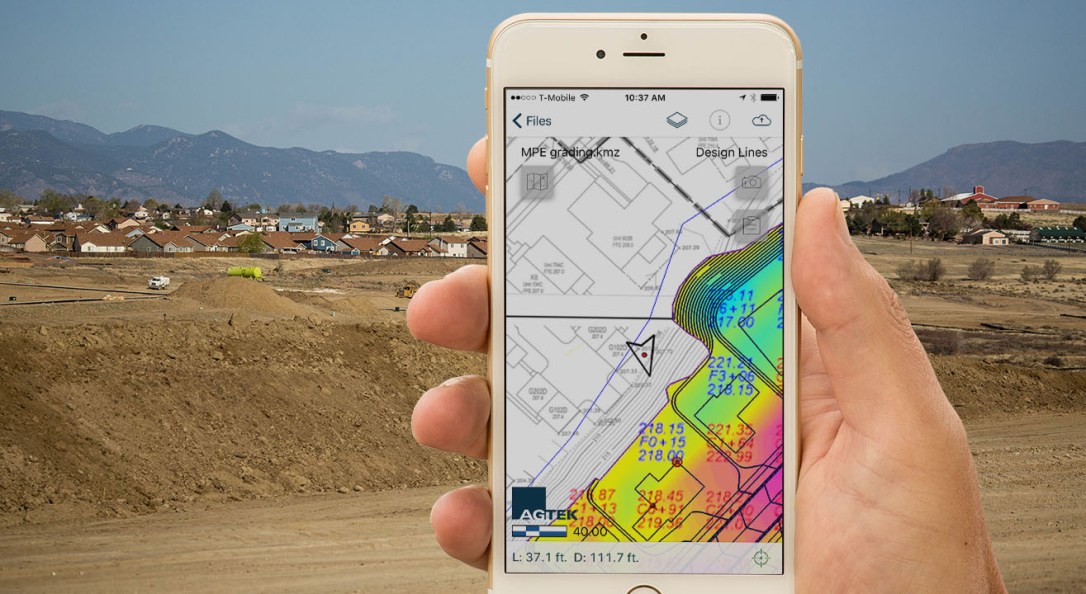
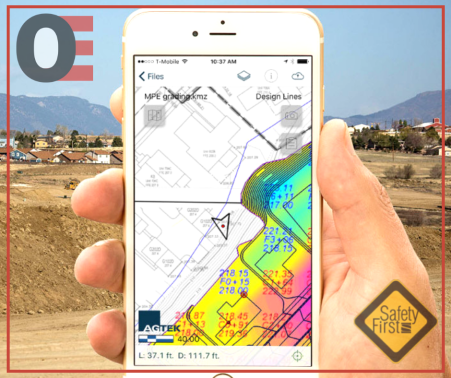
  • Accurate imaging and site positioning — GPS, lasers and optics are all used to create accurate positioning and data relays that allow the human operators to effectively do their jobs, eliminating rework and allowing for effective estimating at the beginning of the project. Further, upgrading the 2D plans produced by the civil engineers to 3D models provides more useful data, particularly with regards to the subgrade model. Problem areas, such as poor drainage areas, can be spotted and addressed before moving the heavy equipment into place.
  • Elimination of certain tasks through the use of technology — 3D designs and grade control systems allow for precise grading and earthmoving, skipping rough grade and cutting the site directly, to finish grade in a single activity. Further, machine metrics and automation reduce the need of manual measurement checks, which are both heavy in time and cost. These plans ensure bids are accurate and precise, so that the work can take place as projected, on time and budget.
  • Reduction of risk / safety for workers — training in the various tools ensures that all the workers have access to the information they need to perform their jobs safely and accurately. From planning and training to documentation and processes, having access to the right information and tools allows each project to be conducted safely and with optimal staffing.

How the excavation industry looks today

With the power of technology comes the ability to serve customers more fully and accurately, with end to end project site development. From the initial site evaluation to estimate preparation, to determining the scope of work and to the actual effort of hpim3061.jpgearthmoving and excavation, achieving the goals of the project completion, on budget and on time.

At OE Construction, we are experienced in the use of Trimble® Grade Control Systems, providing the opportunity to better manage equipment, as well as to gain a better understanding of how each machine is operating in the field. The Trimble Connected Machine solution provides OE the chance to collect as-built measurement data quickly, to deliver such data to the office, and to receive GNSS corrections online almost instantly.

More precise grading and earthmoving are achieved due to the speed at which the office created 3D design is sent to the machine operator. By providing the office and machines in the field the latest information, and keeping each up to date throughout the course of each project, both rework and drive time are drastically reduced, even minimized, saving invaluable time and money while optimizing project efficiency.